
Last updated November 16, 2026
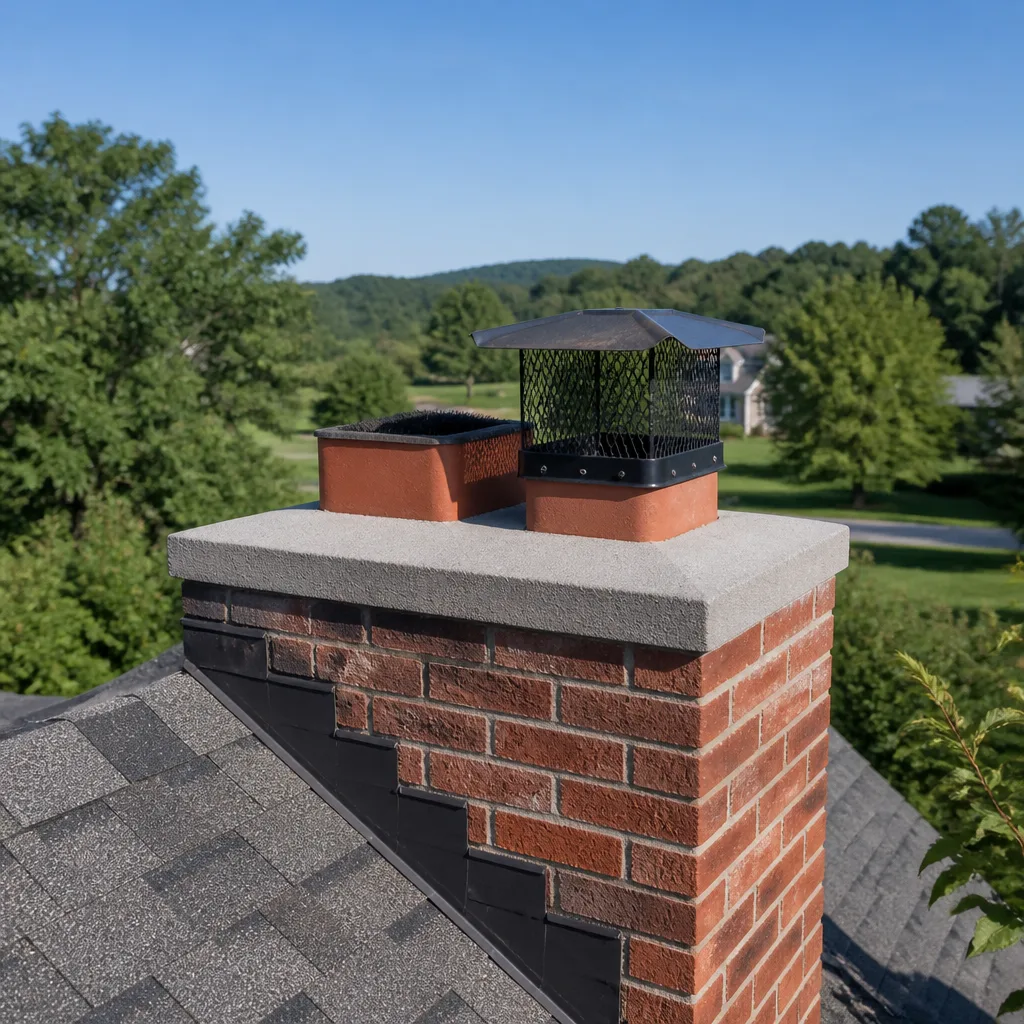 Sweep & inspection
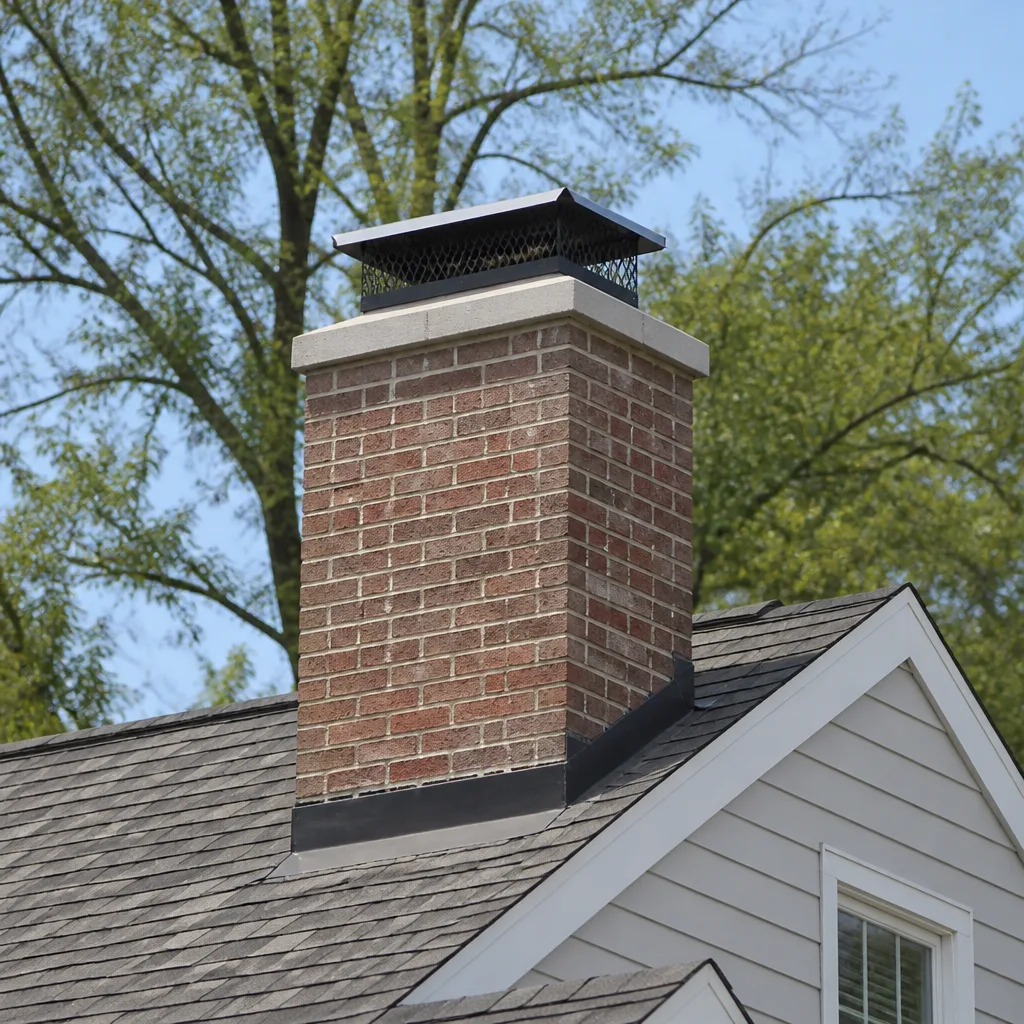 Caps & crowns
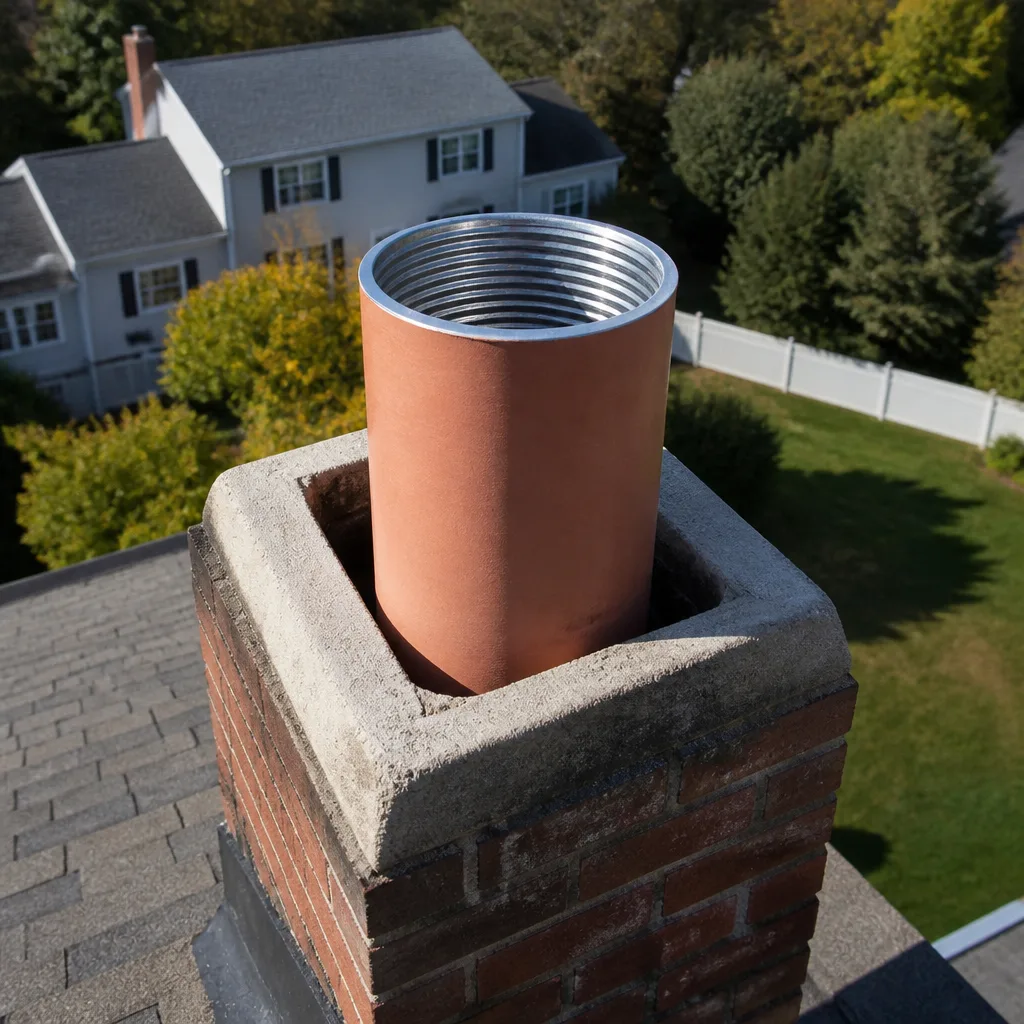 Flue relining
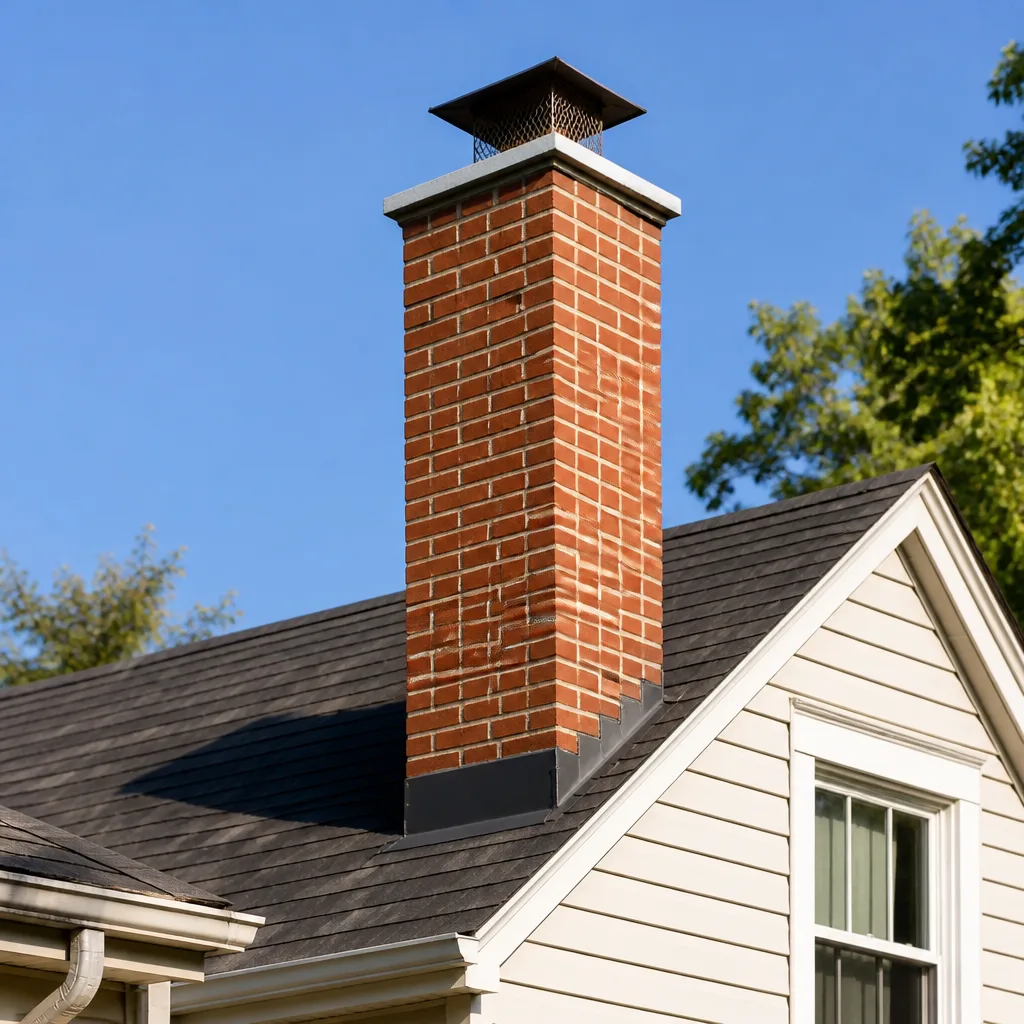 Masonry repair
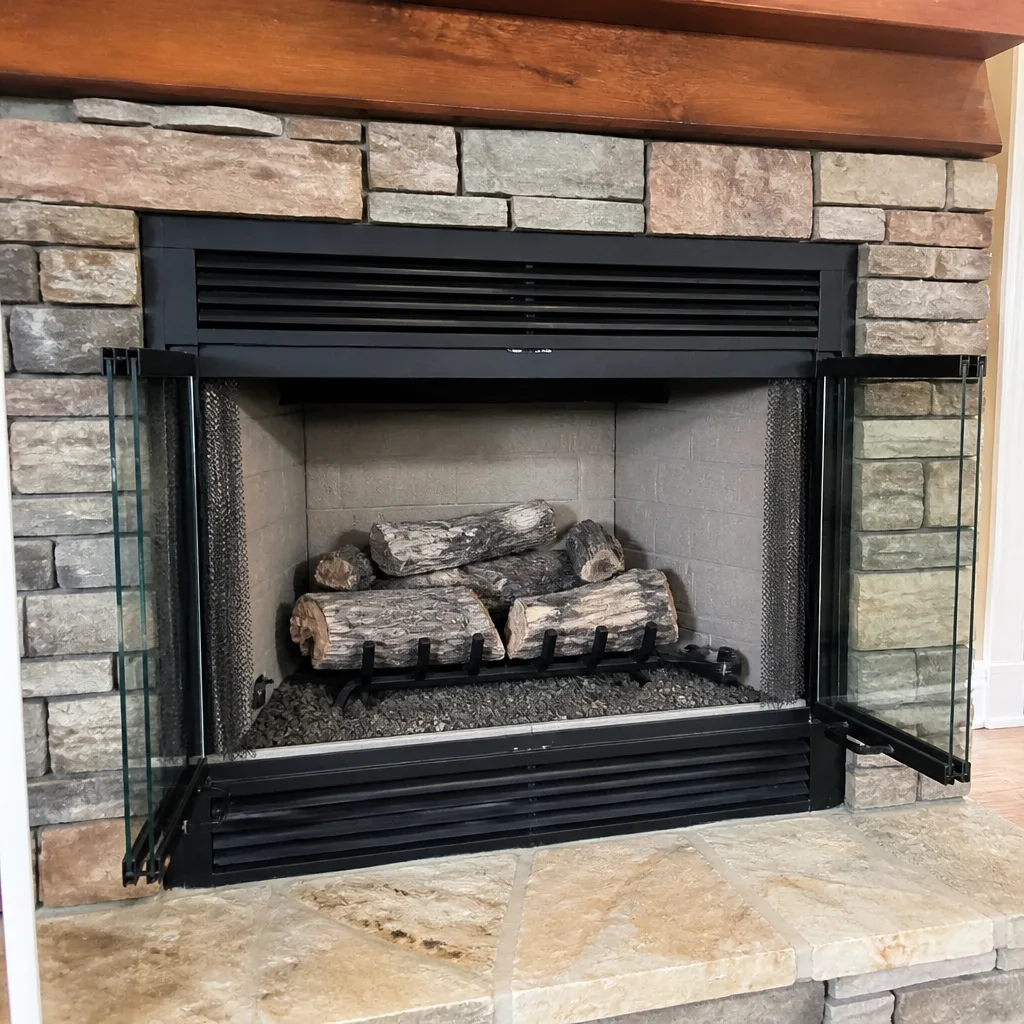 Gas fireplace service
Level 1 sweep and inspection to the NFPA 211 annual standard - flue, crown, cap, and flashing checked and photographed
Chimney sweep logs do not sweep chimneys. They loosen some creosote - which then falls where a brush and vacuum still have to collect it.
How to Hire a Chimney Cleaning Contractor in Conroe: A Step-by-Step Guide
Here’s the part most homeowners don’t know until they’re standing in their living room handing a deposit to a stranger: Texas doesn’t license chimney sweeps. There’s no state board, no exam, no plastic card that proves the person on your roof knows what a flue liner is supposed to look like. So the entire job of qualifying who climbs up there and reaches inside your chimney falls on you. That’s the whole reason this guide exists. We’re going to walk through the exact process we’d use if we were hiring a chimney sweep in Conroe for our own home – what to ask, what to verify, and what should make you slow down. By the end, you’ll have a vetting checklist you can run in about twenty minutes.
Quick Answer
To hire a chimney cleaning contractor in Conroe, verify third-party certification directly rather than trusting a business card, ask specific questions about their cleaning tools and inspection method, and demand a written scope that separates cleaning from any repair work. Because Texas does not license chimney sweeps, certification through a national chimney body and a documented camera inspection are the two things that separate a real specialist from a generalist handyman who lists cleaning as a side job.
Styles & brands we work with
- Sweep & inspection
- Caps & crowns
- Flue relining
- Masonry repair
- Gas fireplace service
Table of Contents
- Why Texas Doesn’t License Chimney Sweeps
- What CSIA Certification Actually Means and How to Verify It
- The Questions That Reveal a Real Chimney Specialist
- How to Read a Chimney Cleaning Quote
- When a Contractor Who Sells Liners Is a Conflict of Interest
- Red Flags Specific to the Conroe Market
- What a Proper Inspection Should Include
- Step-by-Step: The Hiring Process From First Call to Final Report
Why Texas Doesn’t License Chimney Sweeps
Chimney work in Texas sits outside any state licensing framework. There’s no equivalent of the plumbing or electrical license that a homeowner can look up in a state database and confirm. That single fact reshapes how you should hire, because it means the usual shortcut – “check that they’re licensed” – gives you nothing to check.
What fills the gap is national certification. A genuine chimney professional holds credentialing through a recognized chimney industry body, and that credential is verifiable through the issuing organization, not just printed on a card. The distinction matters in a Conroe market where fireplace use is common and chimney cleaning is an easy side service for someone whose main work is roofing, pressure washing or general handyman jobs. Those contractors may be perfectly honest people. They just haven’t been trained on flue inspection, haven’t learned to read a liner, and often don’t own the camera equipment that would show you what’s actually wrong inside your chimney.
None of this means every uncertified worker is bad. It means the credential is the one objective screen you have, and skipping it puts the whole judgment call back on vibes. The good news: Conroe has real specialists who do this work as their trade, and once you know what to ask, they’re not hard to find. If you want a starting point from a company that works only in this trade, our Chimney Sweep Conroe page lays out the core services. Use it as one reference, then vet anyone you call the same way.
What CSIA Certification Actually Means and How to Verify It
CSIA certification – from the Chimney Safety Institute of America – means the technician passed an exam covering chimney construction, venting, inspection standards and safety, and committed to continuing education to keep the credential current. It is not a guarantee of perfect work. It is proof that the person has been tested on the parts of your chimney that matter.
Here’s the part people get wrong. They see a CSIA logo on a truck, a website or a business card, and they stop there. Logos are easy to copy and easy to imply. Verification takes two minutes if you know where to look:
- Ask for the technician’s name, not just the company’s. Certification belongs to individuals, not businesses. A company can advertise certification and still send an uncertified employee.
- Verify through the issuing body directly. The CSIA maintains a searchable directory of certified sweeps. Look up the individual name yourself rather than asking the company to send you a certificate image.
- Confirm the credential is current. Certification requires renewal. A lapsed credential is not a current credential.
- Ask who will actually be on site. On a two-person job, ask whether the certified technician will be the one doing the inspection. That’s the difference between a certification on file and certification in the room.
We’ve watched homeowners in Conroe compare quotes without ever asking this, then wonder why the recommendations differ so wildly between three contractors. A certified inspector is trained to a defined inspection standard. That’s the reason two honest people can still give you very different answers. We also work with professional-grade materials as a matter of course, which is a separate question from certification but part of the same standard: chimney repair work should use specified parts, not generic substitutes.
The Questions That Reveal a Real Chimney Specialist
Certification gets someone in the door. These questions tell you whether they know the trade. Ask them on the phone before you book.
Which cleaning tools and methods do you use?
A real chimney sweep talks specifics. They should be able to tell you what type of brush or cleaning system they use, how they control dust inside the house, and how they handle a flue that’s become heavily glazed or has creosote buildup. Vague answers like “the standard tools” or “the same everyone uses” are the giveaway. Chimney cleaning isn’t generic – the tool and method depend on the flue type, the fuel burned and the buildup severity. A technician who can’t describe any of this has likely never thought about it.
Is a video camera inspection included?
A chimney is mostly invisible from the room. A camera run through the flue shows the interior condition of the liner – cracks, gaps, misaligned sections, obstruction. Anyone who quotes a repair to you without that camera footage is asking you to trust a guess. Look for a company that includes a camera inspection in the visit and can show you the images.
What goes in the written report?
Ask this over the phone. If the answer is a verbal “it looked fine,” you’ve learned something. A proper report identifies the flue condition, the extent of any damage, and the location of the issue.
Do the pictures come to me?
The footage should reach you directly, not just live on a screen for a minute while a technician narrates. “Know exactly what’s inside your chimney” is the promise you’re testing here.
If a contractor gets defensive about any of these, that’s the answer. A trained specialist has heard every one of them and doesn’t mind.
How to Read a Chimney Cleaning Quote
Most homeowners don’t have a mental model for what a chimney cleaning quote should contain, which makes it easy to compare on price alone. Don’t. Compare on what’s included.
A legitimate quote breaks out the scope in writing:
- The sweep itself, described as a cleaning of a specific flue or firebox.
- The inspection, with the level of inspection stated.
- Camera inspection, if included, listed as its own line.
- The report, written, with images.
- Any recommended repairs, as separate line items – never bundled into the cleaning price as a surprise add-on before you’ve seen evidence.
Suspiciously low bids are usually low for a reason. The likely omissions: no camera, no written report, a quick brush without inspecting the liner, or a “cleaning” that becomes a high-pressure pitch for repairs you never asked about. The pricing you accept should sit inside a written estimate where the final price is set. On the high side, a very expensive cleaning quote with no breakdown is just as unhelpful; ask them to itemize.
On any chimney sweep, ask for the written estimate before work begins and confirm what the estimate covers. If you’re planning for the season, a little preparation beats a rush. Homeowners in Conroe tend to line up their cleaning before the weather turns and the fireplace gets heavy use, and booking in the calm stretch of the year gets you more attention than the busiest weeks.
Ask for the written scope and compare the line items before you agree to anything, and call (888) 401-8620 for a free estimate. We answer 24/7. Fast dispatch from 7am to 7pm, Sunday through Friday.
When a Contractor Who Sells Liners Is a Conflict of Interest
Every serious chimney company sells parts. Liners, caps, dampers and resurfacing systems are core to the trade, and a company that cleans your chimney but can’t fix it sends you off to find a second contractor who has to come out and redo the diagnosis. That handoff is where things go wrong and where information gets lost.
So the fact that a contractor sells liners is not, by itself, a problem. We use HeatShield for chimney resurfacing and DuraFlex liner systems for relining, and we also work with Famco and Olympia Chimney products for caps, dampers and ventilation components. That’s a materials shelf reflecting what the trade specifies, not a sales target. Full-service scope is a strength when the recommendation is evidence-led.
The conflict of interest appears when the recommendation arrives without evidence. Here’s how to tell the two apart:
- A clear contractor shows you the problem on camera, then explains the repair. A conflicted one tells you the liner is shot and hands you a price.
- A clear contractor can tell you when a repair can safely wait. A conflicted one rarely says wait.
- A clear contractor separates “needs attention now” from “watch this.” A conflicted one puts everything in the urgent column.
- A clear contractor names the product and why it’s specified. A conflicted one quotes a number with no explainable reasoning.
The single best protection is a camera inspection. If you’ve seen the footage, you’re not being asked to take anyone’s word for a thousands-of-dollars recommendation. If you haven’t, ask for it before you sign anything. A company that finds nothing wrong should be willing to tell you so.
Red Flags Specific to the Conroe Market
Conroe has a specific pattern worth knowing about. After storm season, an out-of-area company swings through, knocks doors or blankets local ads, and offers chimney work or a “free inspection.” A free inspection with no camera and no report isn’t an inspection. It’s a sales call, and the follow-up repair quote can arrive before you’ve had a chance to think.
The tells to watch:
- They’re not from around here and can’t be found later. Out-of-area operators who appear after storms don’t carry the reputation risk a local specialist does. Ask for a business address and local verification. A company that can be found in Conroe later is more careful about what it recommends now.
- The “free inspection” that finds thousands in needed repairs. Ask to see the camera footage before any repair is discussed.
- Pressure to sign today. A real chimney issue will still be there next week. Urgency to close is about the sale, not the safety.
- No written report. If nothing goes in writing, there’s no record and nothing you can compare against a second opinion.
- Generic “everything’s shot” language. Ask which parts, where, and what the footage shows. Specific answers take specifics.
- A price far below everyone else’s. That line is usually missing the inspection, the camera, or the report.
Conroe burns fireplaces hard during the cool months. That use pattern also means legitimate repairs come up more often here than in a place where a fireplace goes unused. The difference between a real repair and an upsell lives in the evidence. In our experience, the honest conversation is the one worth having, and the company that says “this can wait until next season” is the one you’ll call back.
What a Proper Inspection Should Include
A chimney inspection is not a peering-up-from-the-firebox glance. It’s a defined evaluation of the whole venting system, and it should follow recognized inspection levels.
What to expect:
- A visual inspection of accessible parts – firebox, damper, smoke chamber, flue, cap and the exterior of the chimney where reachable.
- A camera run of the flue to see the liner’s interior condition.
- Documentation of condition with photos or video, not just verbal notes.
- A written report you keep, so the next inspection has a baseline to compare against.
- A clear separation between what needs repair, what needs monitoring, and what is fine.
An inspection without documentation is a conversation. An inspection with images and a written summary is a record. Ask which one you’re getting before you book. Conroe homeowners buying a home with a fireplace often book an inspection before moving in precisely because nobody knows the chimney’s history. That’s a smart instinct. The report is what makes it useful.
Step-by-Step: The Hiring Process From First Call to Final Report
Here’s the whole process in the order it should run. It takes a few phone calls and a single visit.
- Call and describe the fireplace. Tell them what you burn, how often, and whether you’ve noticed any issue. A technician uses this to match the tool and method to your flue.
- Ask about certification, tools, camera and report. The four questions in the section above. Note the answers.
- Verify the technician’s certification yourself. Look the name up through the issuing body. Don’t take the card at face value.
- Cross-check the business. Can you find an address? Can you find local context? Out-of-area storm operators are harder to find after the sale.
- Request the written scope and estimate before the visit. Confirm what’s included and what the final price depends on.
- Book the visit and be present for the inspection. Ask to see the camera screen and the photos live.
- Review the written report before any repair discussion. If repairs are recommended, demand the evidence and ask what can safely wait.
- Decide on repairs with the footage in hand. The written estimate sets the final price. If something doesn’t feel right, get a second opinion. A company confident in its work shouldn’t object.
That’s it. The whole thing is a screening process, not a leap of faith. If you prefer to start with a company that offers all three core services – sweep, repair and inspection – under one name, so discovery and repair don’t get handed off between vendors, that’s a reasonable place to begin. Look at what’s on offer at our Chimney Sweep Conroe page for the full service scope, then run the list above for anyone.
Common Mistakes to Avoid
- Trusting a logo on a website without verifying the individual. Certification belongs to people, not businesses. Look the technician’s name up yourself through the issuing body. A copied logo on a truck proves nothing about the person on the ladder.
- Choosing on price alone. The cheapest quote is usually cheapest because it removes the inspection, the camera, the report, or all three. Compare scope first, then price.
- Letting a “free inspection” skip the camera. If a camera didn’t go down the flue, no inspection happened – a guess got a label. Ask for footage before any repair is recommended.
- Accepting a repair quote with no written evidence. In Conroe, storm-season door-knockers are a known pattern. No images, no report, no decision.
- Hiring a generalist handyman because chimney cleaning seems simple. Cleaning is easy to list and easy to botch. Flue inspection is the part that requires training, and a generalist usually doesn’t have the camera equipment or the standard behind it.
- Skipping the written report. Without a record, the next contractor starts from zero and you can’t track changes over time. Keep every report.
- Assuming “full service” means “upsell.” A contractor who sells liners and caps isn’t a conflict of interest by default. One who can’t show you why you need them is.
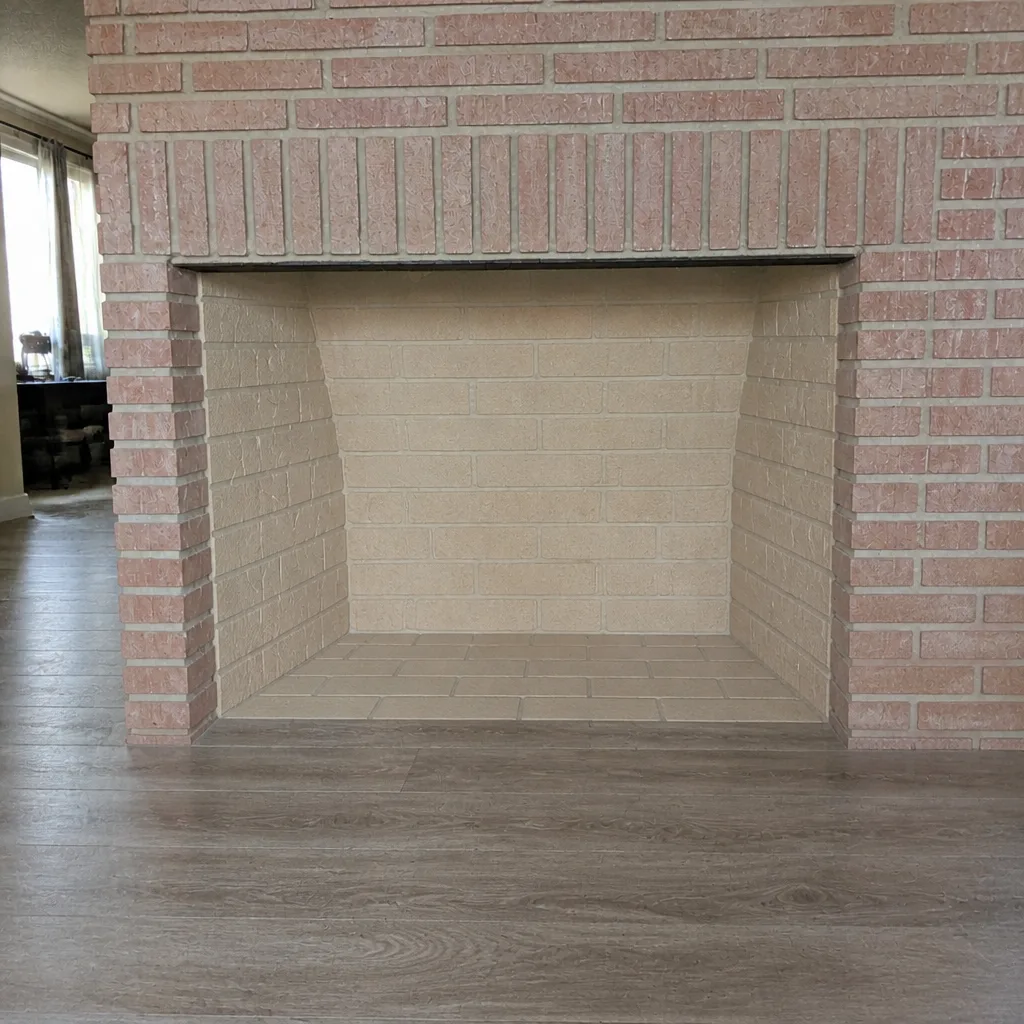
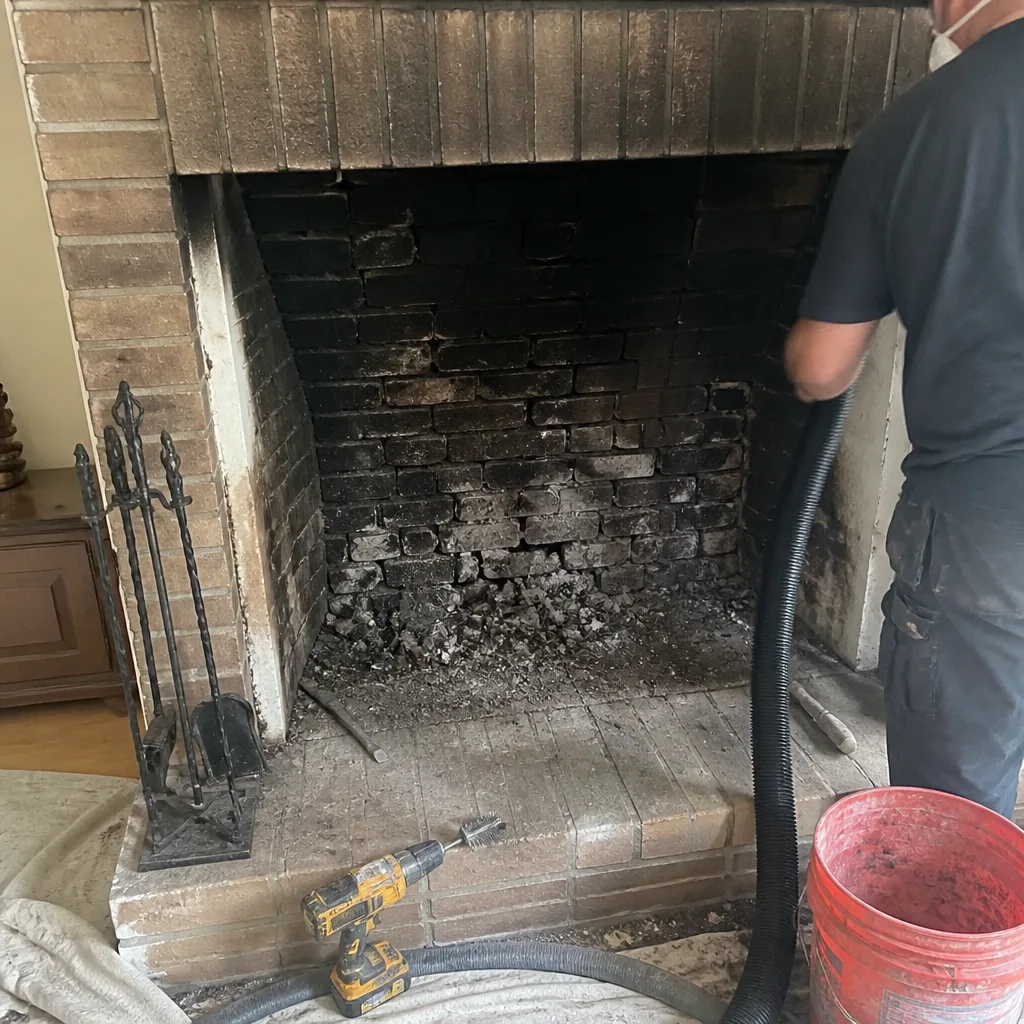
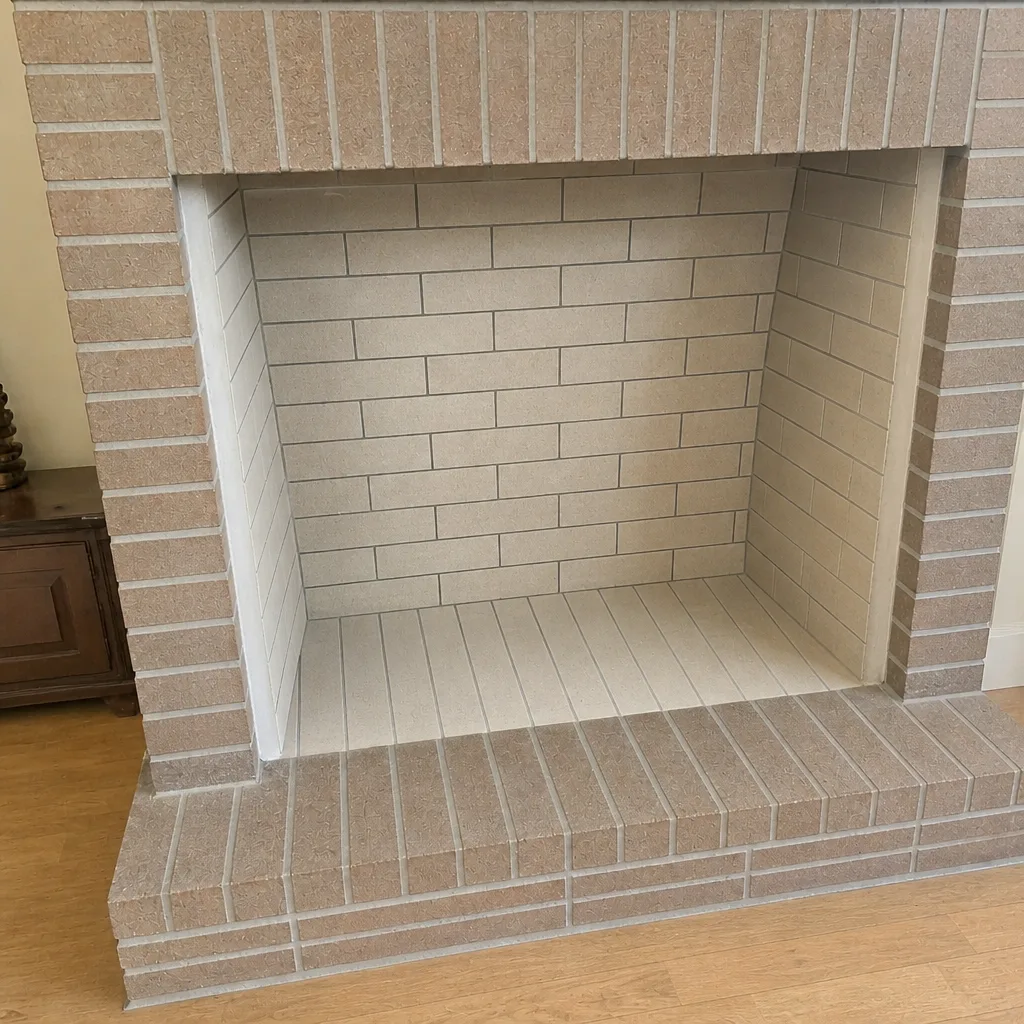
See the difference
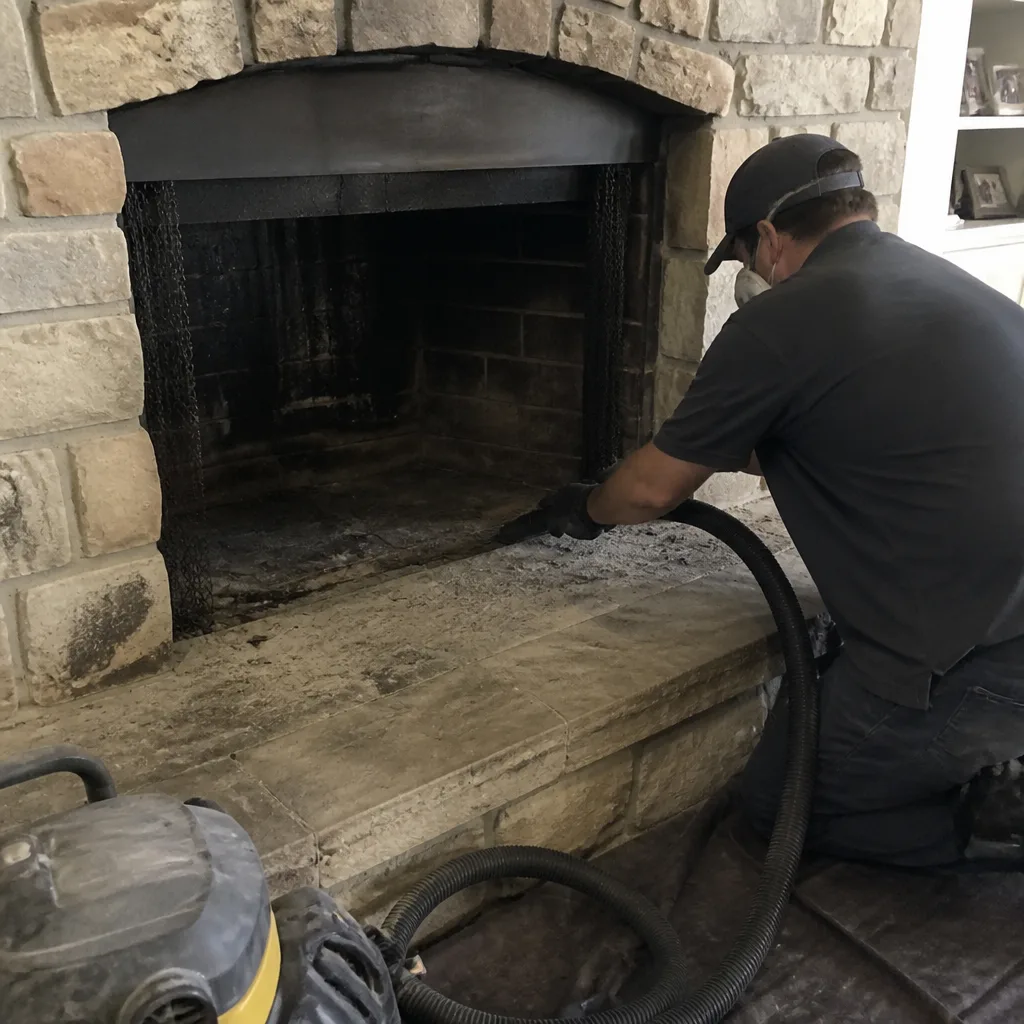 Before
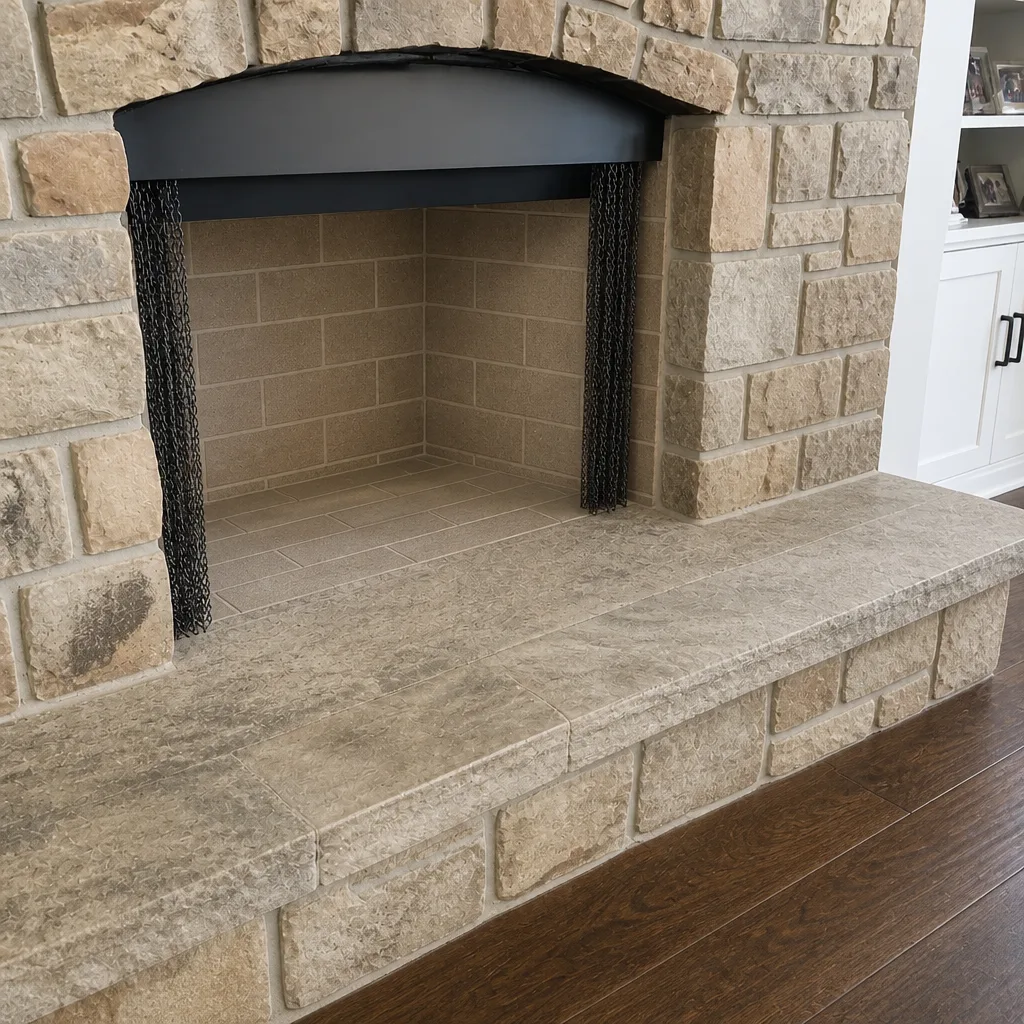 After
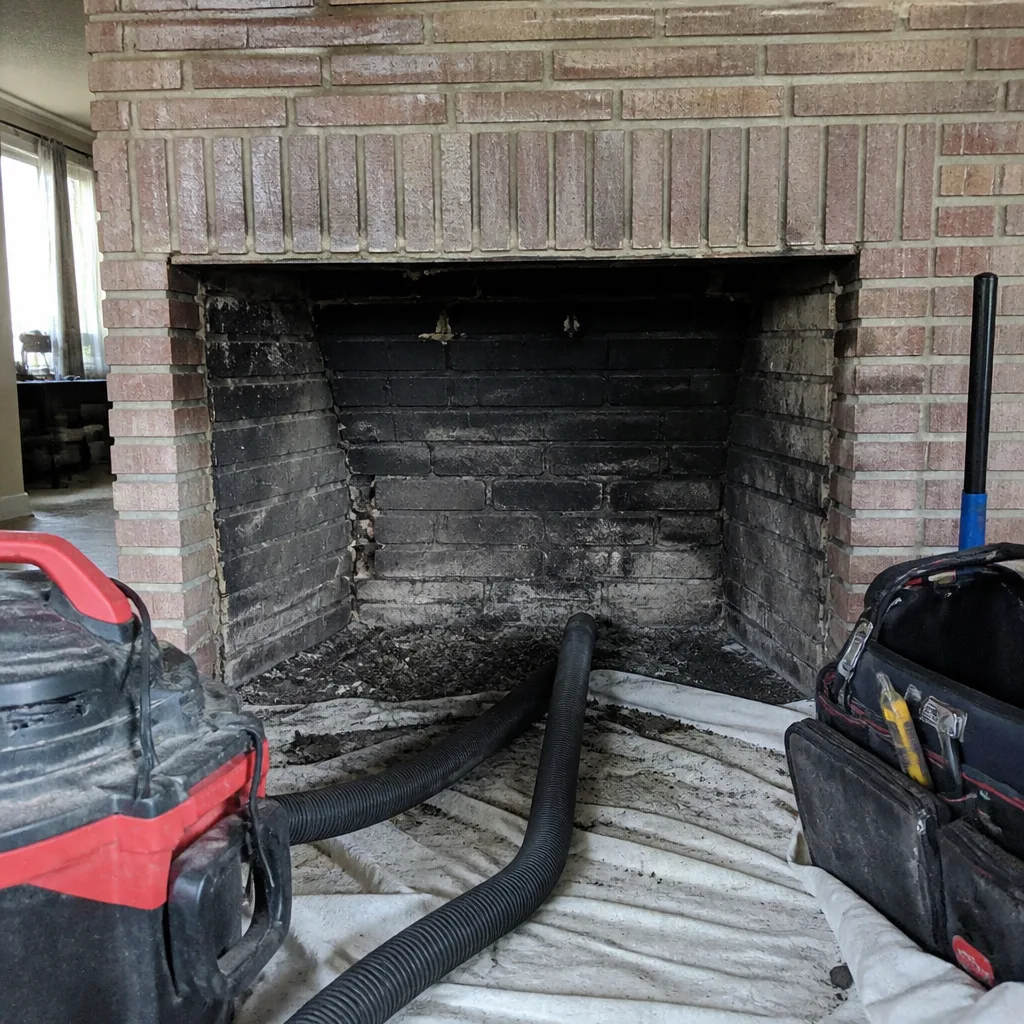 Before
 After
 Before
 After
When to Call a Professional
Some situations need a trained professional on the roof, not a YouTube video and a ladder.
Call a specialist if you notice smoke rolling into the room instead of up the flue, a strong creosote smell in the house, visible cracking or damage to the firebox or masonry, or a damper that won’t open or close properly. Call if it’s been years since the chimney was cleaned and the fireplace gets regular use. Call if you’ve just bought a home with a fireplace and have no service history on it. Call if a chimney fire ever happened – even a small one – because the liner can be damaged in a way you can’t see from the room. And call if you’re preparing for heavy seasonal use and want a documented baseline before the cool months arrive.
Heavy creosote buildup is a genuine fire hazard, and carbon monoxide can escape through a damaged flue. Those aren’t scare tactics, they’re the reason to have the inspection done. A trained specialist knows what to look for. Chimney Sweep Conroe offers free estimates in Conroe – call (888) 401-8620.
Frequently Asked Questions
No, Texas does not license chimney sweeps. There’s no state credential to verify, which is why national certification and direct verification through the issuing body are the two screens a homeowner should rely on before booking work.
Ask for the individual technician’s name, then look that name up in the CSIA’s searchable directory yourself rather than trusting a certificate image or a logo on a truck. The certification belongs to a person, not a business, so the name matters more than the company name. Ask whether the certified technician will be the one on site doing the inspection.
The common rule of thumb is once a year, or whenever buildup reaches a meaningful amount. A fireplace used heavily through the cool months may warrant a cleaning each year. When in doubt, an inspection tells you where you stand.
It should, and you should ask for it in writing. A cleaning with no camera inspection means nobody saw the interior of the liner. Many homeowners asking how to hire a chimney sweep in Conroe miss this detail – the camera is what turns a cleaning into an actual diagnosis, and it’s what makes any repair recommendation verifiable.
Not automatically. A company that cleans and can’t repair leaves you with a handoff. The line to watch is whether they show you the camera evidence before recommending the repair. If you’ve seen the footage, you can decide with facts. If they can’t show you, that’s the conflict.
Verify the company is findable locally, watch for pressure to sign the same day, and insist on a written report with images before any repair is approved. Out-of-area companies that appear after storms are harder to hold accountable. Call (888) 401-8620 for an estimate you can compare, with the written scope in hand.
The Bottom Line
Hiring a chimney cleaning contractor in Conroe is a vetting exercise, not a price comparison. Verify the technician’s certification yourself, ask specific questions about tools, camera and report, and treat a written scope with images as the line between a diagnosis and a guess. A company that shows you its evidence and can tell you when a repair can safely wait is doing the job right. The ones that can’t tell you why are the ones to walk away from. Start your fireplace season with a clean flue, a sound liner and a safe fire – and the confidence that the person on your roof earned the job.
Chimney Sweep Conroe provides three core services – sweeping, repair and inspection – and works with professional-grade brands including DuraFlex, HeatShield, Gelco, Olympia Chimney, Famco and Copperfield. If you’re in Conroe and want an honest, evidence-led look at your chimney, call (888) 401-8620 for a free estimate. We answer 24/7. Fast dispatch from 7am to 7pm, Sunday through Friday.
Written by the team at Chimney Sweep Conroe.